Exterior basement waterproofing in Youngstown, Ohio means excavating down to the footing and sealing the foundation wall before water reaches it. It is the heavier of the two main approaches, and it fits walls where water pushes through from the clay soil outside, a common setting in a city where roughly 70% of occupied homes were built before 1960. Call 330-642-8091 to reach a local provider.
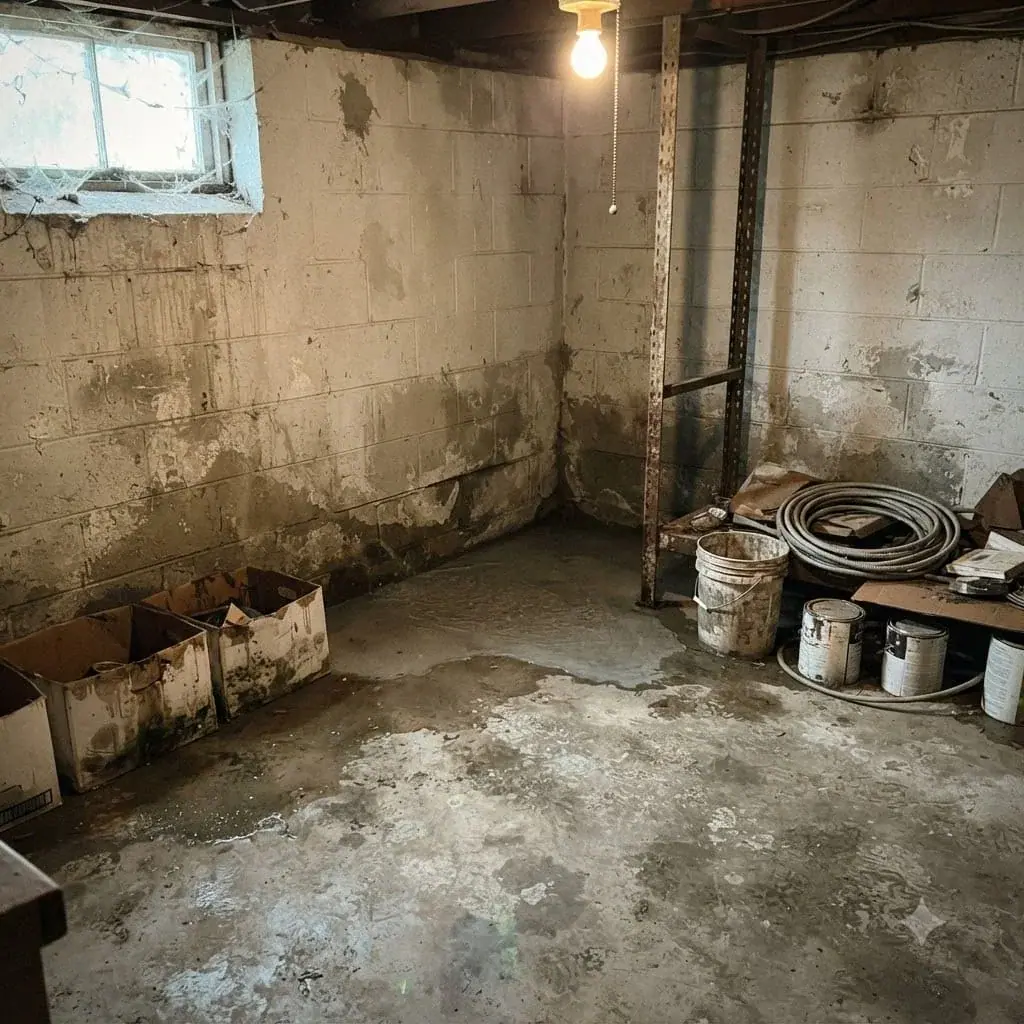
Exterior work stops water at the source. Where interior drainage manages water that has already reached the basement, exterior waterproofing keeps it out of the wall in the first place, with a membrane on the outside face and a drain at the footing to carry groundwater away. On a Youngstown home with chronically wet walls or a finished basement worth protecting, sealing from the outside is often the more permanent answer.
How Exterior Waterproofing Works
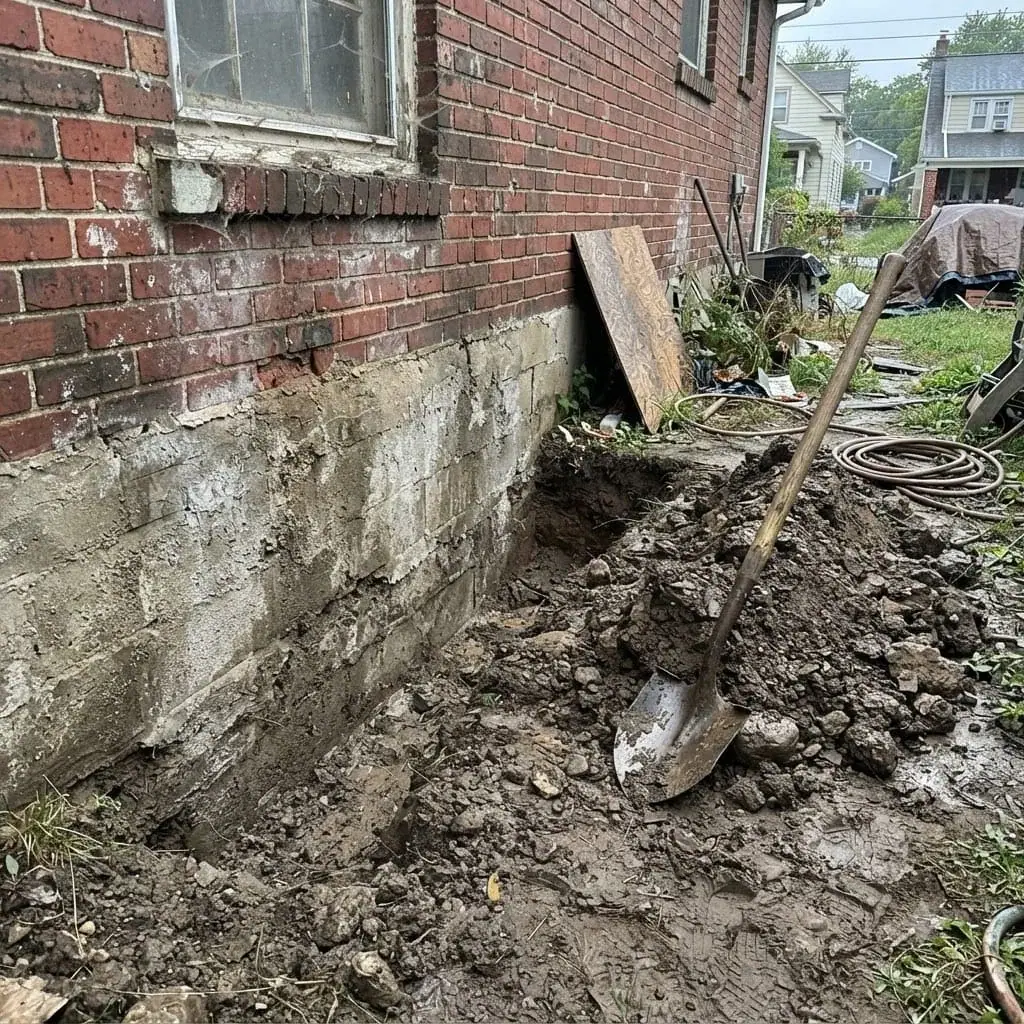
Exterior waterproofing works by rebuilding the foundation's outer defenses from the footing up. First, the soil along the affected wall is excavated down to the base of the foundation, which is the most labor-intensive part of the job. Second, the wall is cleaned and left to dry, and any cracks in the masonry are repaired. Third, a waterproof membrane is applied across the exterior face so water can't soak into the wall. Finally, the footing drain is installed or replaced in gravel at the base, the trench is backfilled, and the grade is restored so the ground slopes away from the house.
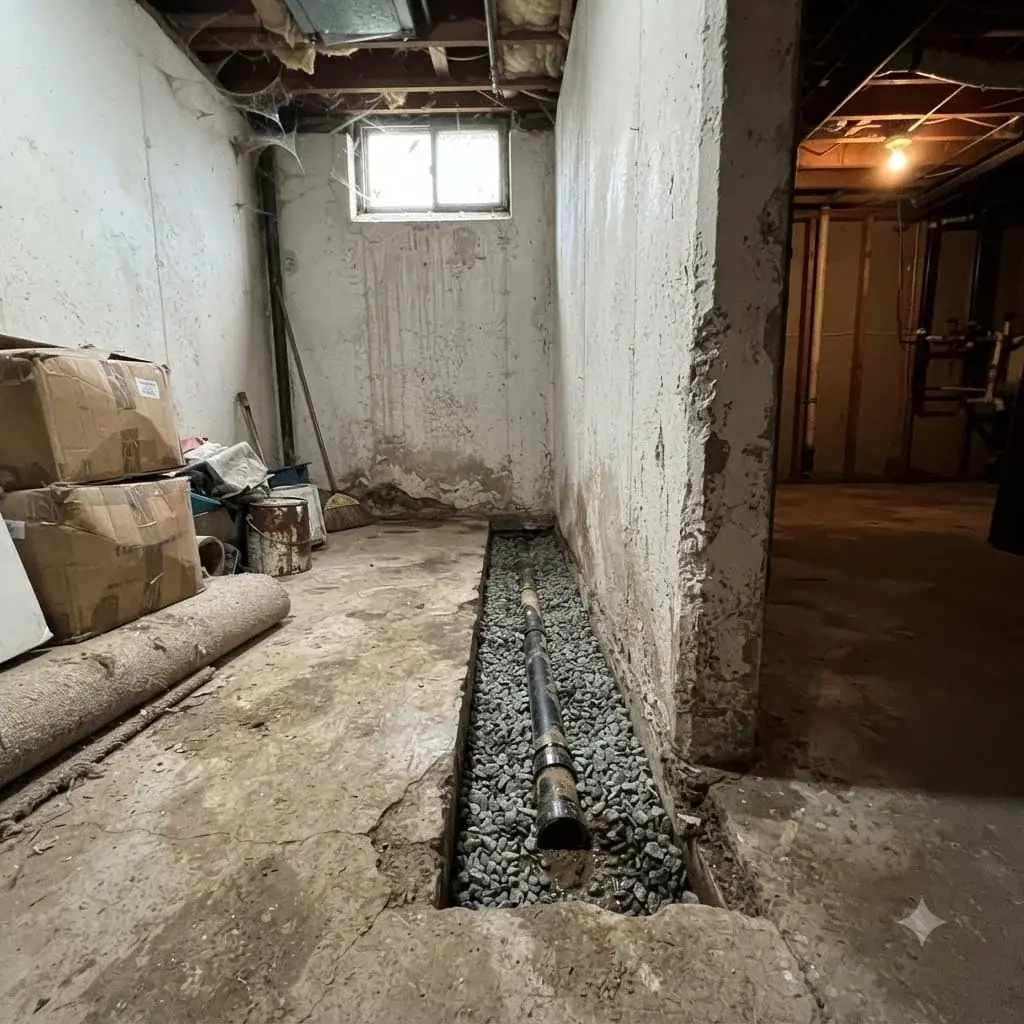
The footing drain is the part that carries water off. It's a perforated pipe set in gravel at the bottom of the excavation that collects groundwater and routes it away from the foundation, either to daylight on a sloped lot or to a sump. Without a working footing drain, a membrane alone leaves water sitting against the base of the wall.
Why Some Youngstown Homes Need Exterior Work
Youngstown's housing stock and soil are the main reasons exterior waterproofing comes up. About 35% of occupied homes here were built before 1940 and roughly 70% before 1960, and their original foundations were built before modern waterproofing details existed. Many mid-century homes were built with clay drain tile around the footing, and clay tile silts up and cracks over decades. When that drain fails, groundwater stays against the wall.
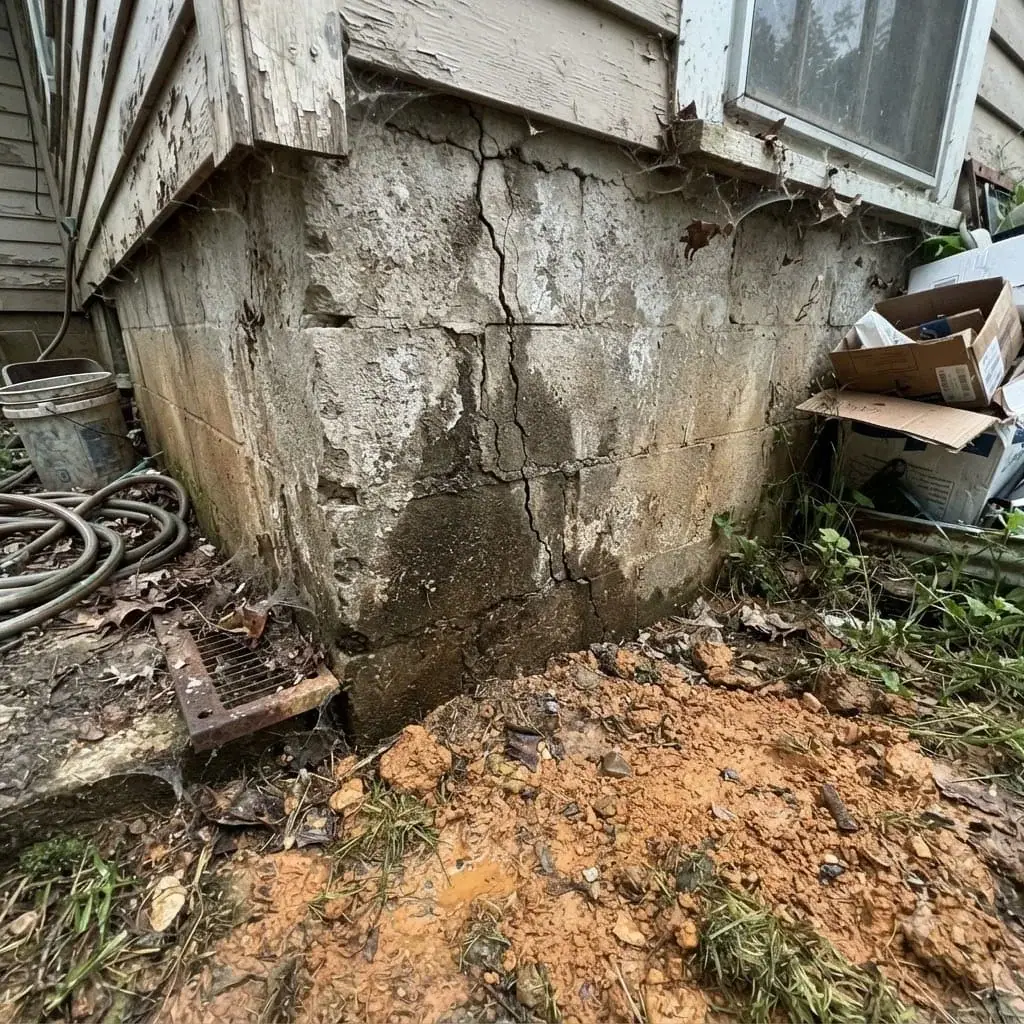
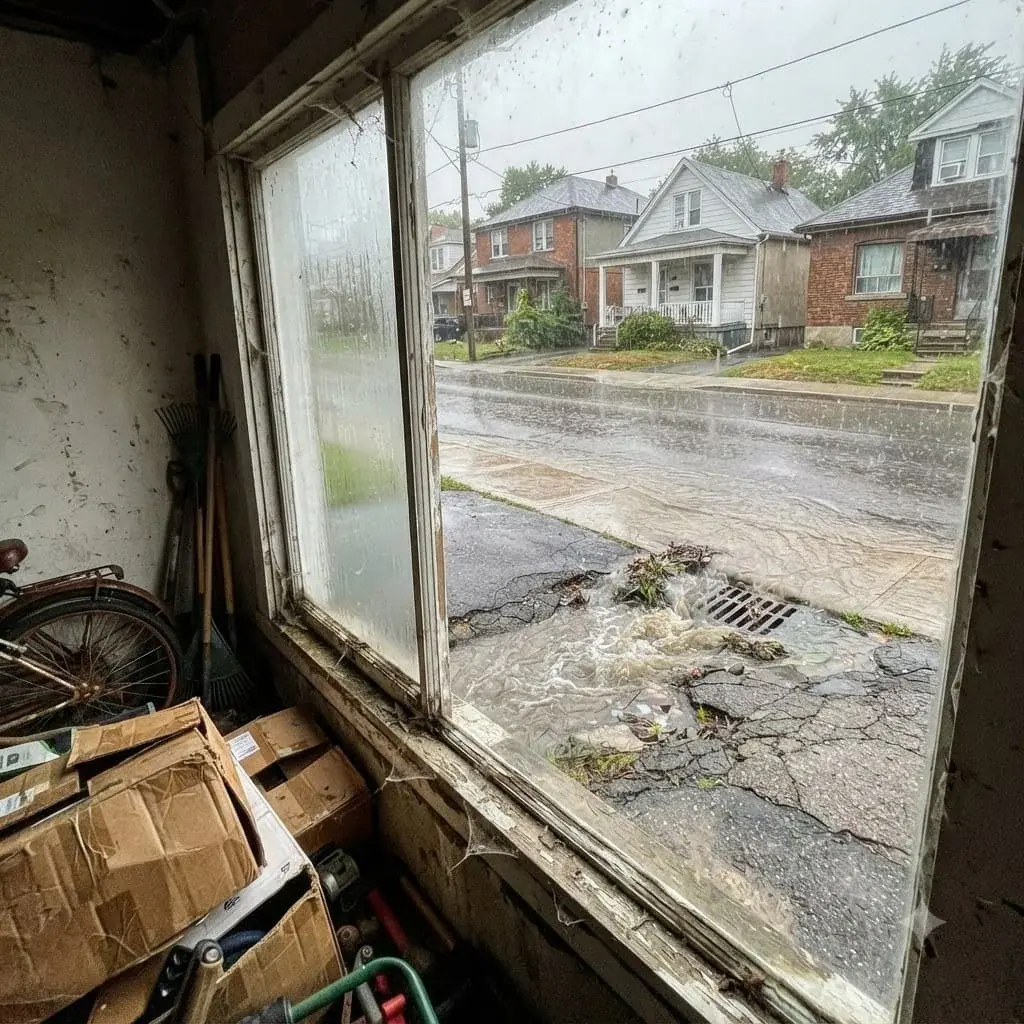
The soil makes it harder. The USDA describes the Mahoning soil series, first established in Mahoning County in 1917, as somewhat poorly drained, with a clay-heavy subsoil and a water table that sits high from October through June. Clay holds water against a foundation instead of passing it down. Add about 41 inches of precipitation and nearly 68 inches of snowfall a year, and a wall can sit in saturated soil for most of the year. Freeze-thaw cycles then widen the cracks and mortar joints a little more each winter.
Exterior waterproofing suits a few specific situations: a wall that leaks across its whole face rather than at one seam, a foundation with a failed exterior coating or a failed footing drain, or a finished basement where interior work would mean tearing out walls. It is a bigger undertaking than interior drainage, so it belongs on homes where the water is coming from outside the wall.
Replacing a Failed Footing Drain
A failed footing drain is one of the clearest reasons to dig. When the original clay tile has silted up or cracked, the water it used to carry away has nowhere to go. During exterior waterproofing the footing is exposed, the failed tile along the work area is removed, and a new perforated pipe is set in clean gravel that slopes to daylight or to a sump. A new drain and a sealed wall work as a pair, so the water is both kept out of the wall and carried away from the base.
Grading and Downspouts
Grading and downspouts are the simplest water control a Youngstown homeowner has, and they belong in any exterior conversation. A lot that slopes toward the house, or a downspout that dumps rain right at the foundation, keeps the soil against the wall saturated no matter what else is done. Regrading the ground to slope away from the foundation and extending downspouts well clear of it cuts the water load the waterproofing has to handle. On some homes, better grading and downspout extensions solve a mild problem on their own. On most, they make the membrane and footing drain last longer.
What to Look for in a Provider
Local experience. A provider who knows the Mahoning Valley's older foundations and when a wall needs exterior work versus interior drainage.
An inspection before any digging. The scope should follow what the wall and the lot actually show.
Scheduled appointments, not an open-ended window. A provider who commits to a time and keeps it.
The right-sized fix. Exterior work recommended when the water is coming from outside the wall, and interior drainage when it isn't.
Work is performed by independent professionals. Permit requirements vary between the City of Youngstown, neighboring cities, and the townships, so a provider confirms what the local building department requires before any digging starts.
Frequently Asked Questions
Is exterior waterproofing better than interior drainage?
Exterior waterproofing and interior drainage solve different problems, so neither is simply better. Exterior work stops water from entering the wall by sealing the outside face and draining at the footing, which suits walls that leak across their whole surface. Interior drainage manages water that has already reached the floor, and it is less disruptive. The right choice follows where the water comes from, and an inspection shows that.
How long does exterior basement waterproofing take?
Exterior basement waterproofing takes several days to more than a week, since excavation is the slow part. The sequence is digging down to the footing along the affected wall, sealing the wall, installing the footing drain, backfilling, and restoring the grade. Weather matters more than with interior work, because the wall needs to be dry before the membrane goes on. A single-wall job finishes faster than a full-perimeter excavation.
Can exterior waterproofing be done in winter?
Exterior waterproofing is harder in a Youngstown winter because frozen ground slows excavation and the wall must be dry for the membrane to bond. A mild stretch sometimes allows it, but interior drainage is the better cold-weather option because it works below the slab regardless of the weather outside. A wall that needs exterior sealing is usually scheduled for the thaw.
Will fixing my grading and downspouts fix my wet basement?
Fixing grading and downspouts can solve a mild basement moisture problem and helps a serious one. Ground that slopes toward the house and downspouts that release rain at the foundation keep the soil saturated against the wall. Regrading to slope away and extending downspouts well clear of the house cuts that water load. On a wall that's already failing, grading alone won't be enough, but it makes any waterproofing last longer.
Does the whole yard have to be dug up?
Exterior waterproofing only requires excavation along the walls that are leaking, not the entire yard. On many Youngstown homes that means one or two walls, not the full perimeter. A trench is dug down to the footing along the affected section, the work is done, and then the trench is backfilled and the grade restored. Landscaping, patios, or a driveway over the dig line add to the job, which is why access is assessed during the inspection.
Interior vs exterior basement waterproofing explained: how each system works, when to choose one over the other, and what most Youngstown homes actually need. Call 330-642-8091.
Where Mahoning Valley basement flooding comes from: the river's flood history, combined sewers, and clay soil, and what protects a basement. Call 330-642-8091.