
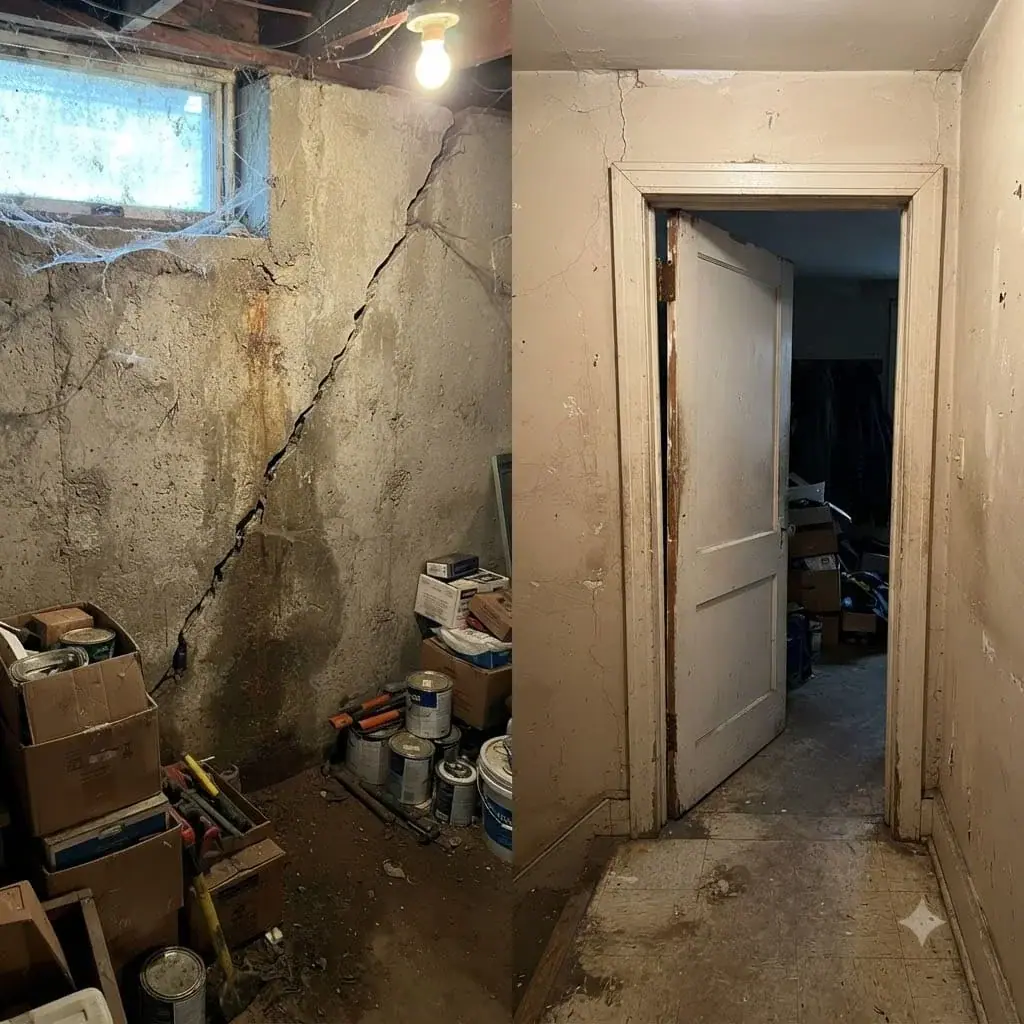
Mine Subsidence Coverage in Mahoning County, Ohio: What Homeowners Should Know
Mine subsidence coverage in Mahoning County: what Ohio's mandatory policy covers, its limits and deductible, and how it differs from a wet basement. Call 330-642-8091.
Basement wall repair in Youngstown, Ohio handles bowing and cracked walls with carbon fiber straps, steel wall anchors, and crack sealing, matched to how far the wall has moved. A basement wall that bows inward or cracks is reacting to soil and water pressure from outside, and the clay-rich ground around Youngstown foundations, with a subsoil the USDA puts at 35 to 45 percent clay, builds that pressure every wet season. Call 330-642-8091 to reach a local provider.
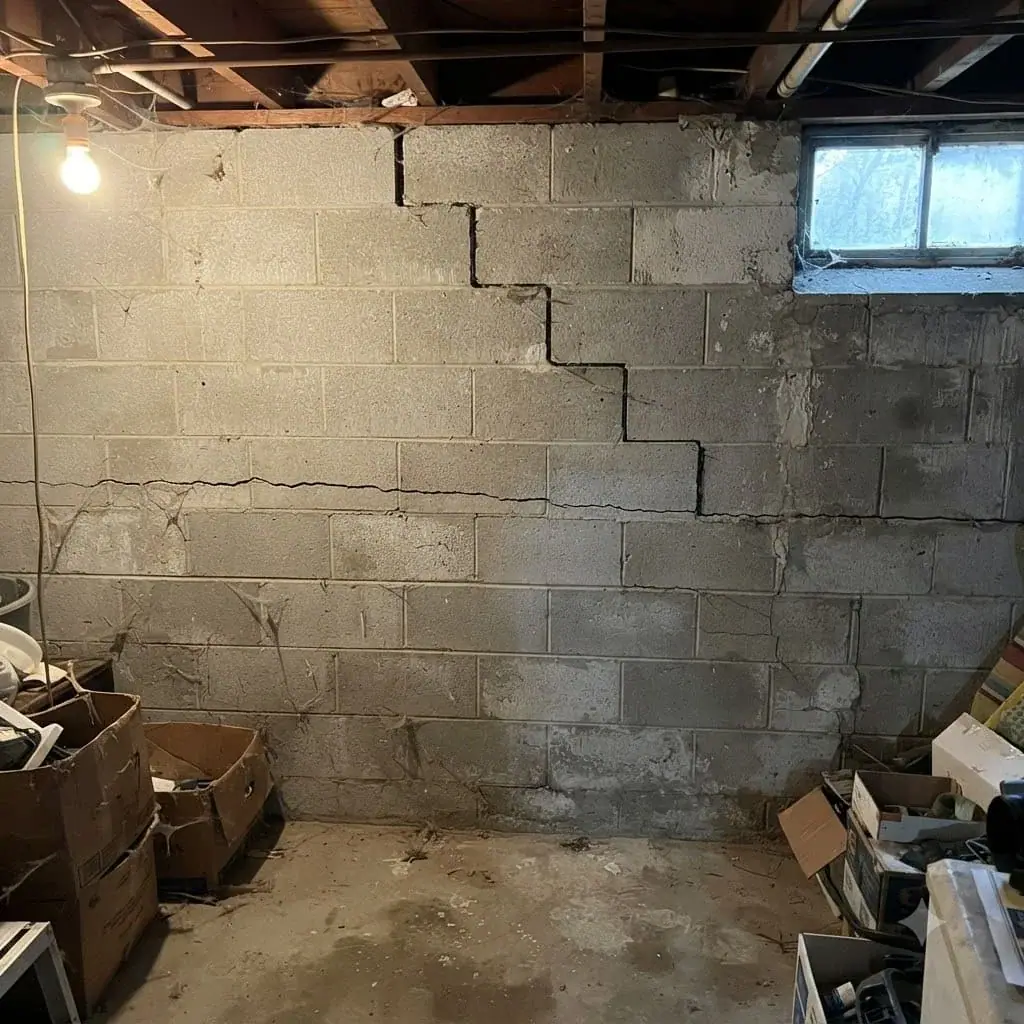
A moving wall is a structural problem, not just a water problem. Saturated clay holds water against the foundation, and when the ground freezes and thaws it heaves and shifts against the wall again and again. Over time a block or stone wall answers that pressure by bowing in, cracking horizontally, or leaning at the top. The repair stabilizes the wall, and where it's needed it is paired with waterproofing so the water driving the movement gets handled too.
Basement wall damage shows itself in a handful of clear signs. A horizontal crack running along the middle of a block wall is the classic warning, since it marks where the wall is bending under pressure. Other signs include a wall that bulges or bows inward, a wall that leans at the top where it meets the joists, stair-step cracks along the mortar joints of a block wall, and a wall that has started to slide in at the bottom. Any of these means the wall is losing its fight with the soil, and the sooner it's addressed, the less it moves.
Wall repair in a Youngstown basement comes down to matching the method to the amount of movement. Three main approaches cover most walls, depending on how far the wall has gone.
Carbon fiber straps suit walls with minor to moderate bowing, generally a wall that has moved less than about two inches and isn't actively sliding. Vertical lines on the wall are ground and cleaned, then high-strength carbon fiber straps are bonded from the floor to the sill with structural epoxy. The straps lock the wall in place and stop further inward movement, and they sit nearly flush so the wall can still be finished.
Steel wall anchors suit walls that have bowed further or are still moving. Anchors connect the basement wall through a rod to a steel plate set in the soil out in the yard, and tightening them holds the wall and can, over time, recover some of the movement. Anchors need yard access on the outside, which is checked during the inspection.
Crack sealing and injection handle cracks that are letting water in but aren't a structural threat on their own. The crack is injected with a resin that fills it through the full thickness of the wall. On its own, crack sealing stops a leak, but when a crack is a symptom of a bowing wall, the movement has to be addressed too, not just the gap.
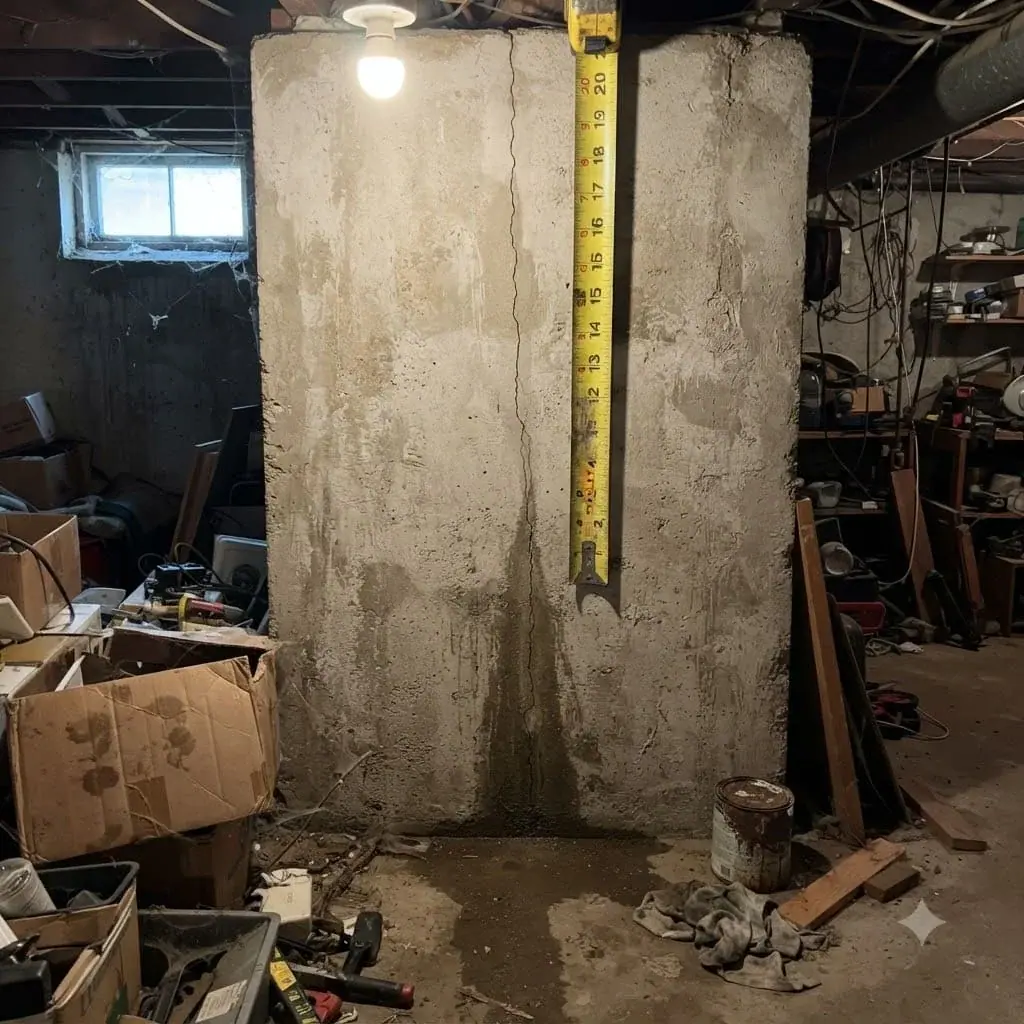
Youngstown foundations move for reasons tied to the soil, the age of the housing, and the winters. About 35% of occupied homes here were built before 1940 and roughly 70% before 1960, and the block and stone walls of those decades were never engineered for modern soil loads. The ground around them formed from glacial till, and the USDA classes the Mahoning soil series as somewhat poorly drained, so water stays in the clay against the wall. With about 41 inches of precipitation and nearly 68 inches of snowfall a year, that soil is wet for most of the year.
Then winter drives the freeze-thaw cycle. Water in the soil and in the mortar joints freezes, expands, and shifts the wall, and repeats that dozens of times a season. A wall that looked fine five winters ago can show a horizontal crack today.
Ohio lists Mahoning County among the counties where homeowners insurance policies must include mine subsidence coverage, and subsidence is a separate cause of cracks and settlement from the soil and water pressure that bows a wall inward. Both show up as cracks in the same older foundations. If a wall in your home has cracked or moved and you aren't sure which cause is behind it, call 330-642-8091 and a local provider can walk through what applies before any work starts.
Work is performed by independent professionals. Permit requirements for structural repair vary between the City of Youngstown, neighboring cities, and the townships, so a provider confirms what the local building department requires before work starts.
A horizontal crack in a block basement wall is the most serious crack pattern, because it marks where the wall is bending inward under soil pressure. Unlike a thin vertical crack, which is often just shrinkage, a horizontal crack means the wall is losing its fight with the ground outside. It won't recover on its own and tends to worsen each wet season and each freeze-thaw winter. It should be assessed before the wall bows further.
Carbon fiber straps suit walls with minor to moderate bowing, generally under about two inches of movement, that aren't actively sliding. Steel wall anchors suit walls that have bowed further or are still moving, and they can recover some movement over time because they're tightened from a plate in the yard. Carbon fiber needs no outside access, and anchors do. The amount of movement decides it, which is what the inspection measures.
A bowing wall can be stabilized without rebuilding when it's addressed before it moves too far. Carbon fiber straps or steel wall anchors hold the wall and stop further movement, and anchors can pull a wall back over time. Full rebuilding is a last resort for walls that have failed structurally. Catching the problem at the first horizontal crack is what keeps it a stabilization job rather than a rebuild.
Fixing the wall stops the movement, but water needs its own fix. Carbon fiber and anchors stabilize the structure, and they don't drain the water that's pressing on it. Crack injection stops a specific leak. When a wall is both moving and leaking, the usual answer is stabilization plus waterproofing, often interior drainage, so the pressure driving the movement is relieved. Handling only one side of the problem leaves the other to come back.
Mine subsidence can move a foundation, and Ohio requires homeowners policies in Mahoning County to include mine subsidence coverage. Subsidence shows up as settlement or sinking, while soil pressure usually bows a wall inward, but both appear as cracks in the same older walls. If you're unsure which is behind your cracks, call 330-642-8091 and a local provider can walk through what applies before any work starts.
Mine subsidence coverage in Mahoning County: what Ohio's mandatory policy covers, its limits and deductible, and how it differs from a wet basement. Call 330-642-8091.
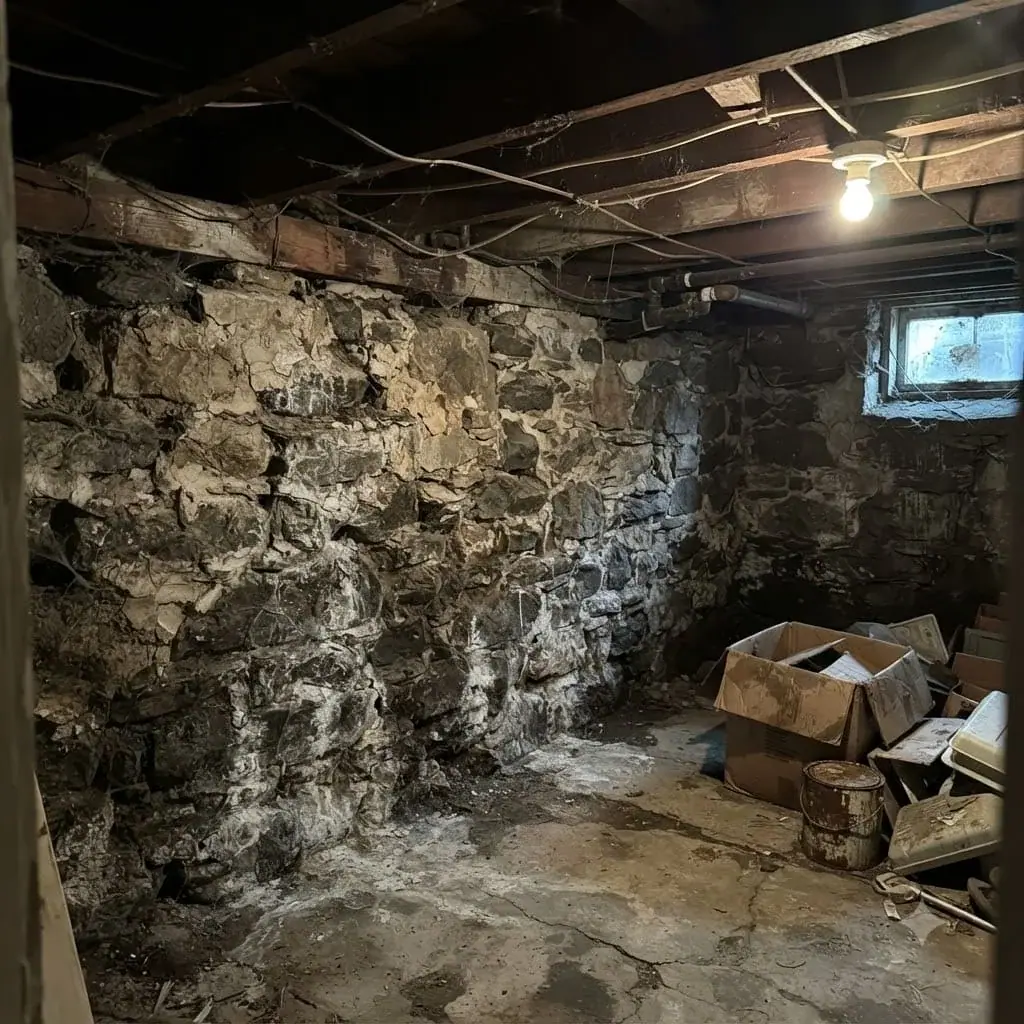
Why older Youngstown homes get wet basements: block and stone walls, failed clay drain tile, freeze-thaw, and how to keep them dry. Call 330-642-8091.
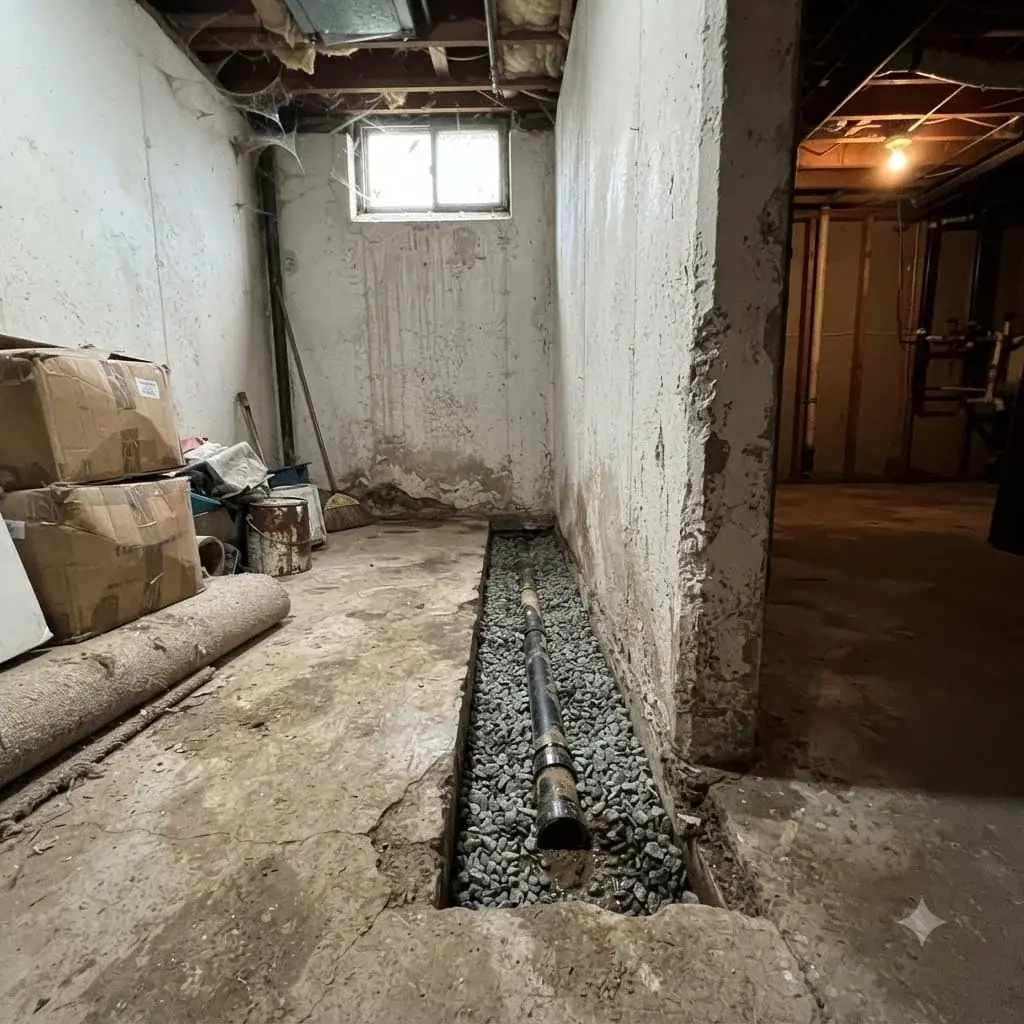
Interior vs exterior basement waterproofing explained: how each system works, when to choose one over the other, and what most Youngstown homes actually need. Call 330-642-8091.
For basement wall repair in Youngstown, call 330-642-8091 to reach a local provider. Contact page or see the full service area.